Sun Life Dental (U.S.)
- 4.7
- Rating
- 50.00K
- Installs
- Free
- Price
 Analysis by App-foxy
Managing dental benefits is rarely difficult because the information is complicated; it is difficult because people usually need that information at an inconvenient moment. I approached Sun Life Dental with that in mind. This free medical app from Sun Life Financial (U.S.) is designed around a few practical tasks: locating a dentist, checking claims, and keeping an identification card available. It is not trying to replace a dentist or provide clinical advice, and that narrow purpose is one of its strengths.
My overall impression is that the app is most useful as a companion to a Sun Life dental plan rather than as a general oral-health tool. If you already use Sun Life for coverage, having plan-related information gathered in one place can be much easier than searching through emails, paper documents, or a browser account. If you do not have a relevant Sun Life plan, the app has little reason to stay on your phone.
How Sun Life Dental works in everyday situations
The first thing I noticed is that the experience is organized around decisions people actually make. You may be trying to find a dentist near home, wondering whether a recent visit has been processed, or standing at a reception desk without your physical card. Those situations are more important than a long list of secondary tools, and the app keeps its purpose focused on them.
You May Also Like

 Blood Strike: 2.5 Anniversary
Blood Strike’s Loadouts Turn Every Drop Into a Tactical Gamble
A close look at Blood Strike’s custom loadouts: how fast access to signature weapons reshapes its battle royale rhythm, rewards preparation, and narrows the gap between fights.

 Pandora - Music & Podcasts
Pandora’s Music Is Easy to Start, but Harder to Recover
Pandora’s strength is its low-effort path from a seed to a station. Its weak spot is how much confidence it asks you to place in connection, setup, and quiet recovery.

 8 Ball Pool
 Is Built on Rivalries, Rematches, and Routine
A close look at the rivalries, rematches, shared routines, and unanswered safety questions that turn a quick pool match into a persistent mobile community.

 Samsung Music
’s Quiet Strength Is Playing What You Already Own
Its reach comes less from spectacle than from dependable access to a personal library. That simplicity is both the app’s strongest retention engine and its ceiling.

 AccuWeather: Weather Radar
AccuWeather Review: A Quick, Clear Forecast for Everyday Decisions
For everyday plans, the best forecast is the one you can understand quickly. AccuWeather makes rain timing, radar, and local conditions easy to act on, with a few trade-offs.

 Hill Climb Racing
Why Hill Climb Racing Still Turns Crashes Into One More Run
A tiny car, a bumpy hill and one more upgrade: Hill Climb Racing keeps resurfacing because its simple chaos makes every near-miss feel personal.
More From Our News Desk
View All News


That focus also makes the product easier to understand than a broad health-insurance application that mixes dental information with medical claims, wellness programs, pharmacy tools, and unrelated messages. Here, the dental context is clear from the start. The developer, Sun Life Financial (U.S.), has kept the app centered on access to coverage information rather than turning it into a general wellness dashboard.
In my experience, the best way to use it is before you need it. I would sign in at home, make sure I could reach the digital identification card, and look over the dentist-search process before an appointment. That small preparation matters because an insurance app is least convenient when you are already late, using a weak mobile connection, or trying to answer a receptionist’s question quickly.
A realistic example would be someone moving to a new neighborhood. Instead of calling several offices and asking each one whether they accept the plan, the user can begin with the dentist-finding function. I would still confirm details directly with the office before booking, because provider participation can change and an online result should not be treated as a guarantee of every billing detail. The app helps narrow the search; it does not remove the need for a final check.
Readability and navigation for quick tasks
The app’s strongest accessibility quality is its limited scope. A person who only wants to view a claim or show an ID card does not have to learn a complicated health-management system. The main tasks are easy to describe in ordinary language, which reduces the mental effort involved in figuring out where to begin.
That simplicity is especially helpful for users who are tired, anxious about a dental bill, or unfamiliar with insurance vocabulary. Rather than asking someone to understand the entire structure of a benefits account, the app supports a few concrete actions. I found that more approachable than the usual alternative of searching a large insurer website and moving through several account pages.
There is also a useful distinction between information you need repeatedly and information you may check only once. The digital ID card is the sort of item worth locating before an appointment, while claims are more naturally reviewed after treatment. Keeping those purposes separate can make the app feel less overwhelming than a dense account portal.
Still, clear navigation depends on more than having only a few functions. Insurance terms can remain confusing even when the buttons are straightforward. A claim status may not answer every question about what a dental office will charge, and a provider result may require interpretation. I would not rely on a quick glance alone when the treatment is expensive or the coverage situation is unusual.
For readers who prefer a computer, the traditional web account may remain more comfortable. A larger screen is better for comparing several pieces of claim information, reading longer explanations, or keeping a document open while contacting a dental office. I see the mobile app as the faster option for short checks, not automatically the best option for every insurance task.
Motor and sensory considerations
Short, focused interactions can reduce physical effort. Checking a card or looking at a claim on a phone is generally less demanding than navigating a full desktop site, particularly when the user is away from home. The app’s purpose also means that a person is less likely to spend a long time scrolling through unrelated material before reaching the needed function.
That said, I would avoid assuming that a simple app is automatically accessible to every person. People with limited dexterity may find small touch targets or repeated sign-in steps tiring, while someone with low vision may prefer a larger display or the operating system’s text and magnification tools. The practical test is whether the app remains comfortable with the phone’s own display adjustments and assistive controls.
Users with hearing-related access needs are unlikely to depend on audio for the core actions described by the app, which is a positive aspect of a mostly visual insurance workflow. Someone with cognitive or sensory fatigue may also appreciate being able to complete one task at a time. I would still choose a quiet moment for setup rather than attempting the first login in a crowded waiting room.
The digital ID card brings an interesting trade-off. It can be easier to enlarge and present than a physical card, and it avoids the problem of forgetting a wallet. On the other hand, a phone can have a dead battery, a damaged screen, or a display that is difficult to read in bright light. For important appointments, I would keep a backup way to identify the plan, whether that means retaining the physical card or knowing how to reach the account through another device.
This is one of the app’s less obvious strengths: it can reduce the need to remember insurance details, but it does not eliminate the need for preparation. Saving the card mentally as “available somewhere in the app” is not the same as practicing the path to it. I recommend opening it once before the appointment so the user knows what to expect and can spot any sign-in problem early.
Situational access: travel, appointments, and stressful moments
Mobile access matters most when circumstances change. A person traveling away from home may need to search for a dentist in an unfamiliar area. Someone starting a new job may need to show coverage before receiving a physical card. A parent or caregiver may need to check information while arranging care for another family member. In each case, a phone-based tool is more convenient than carrying a folder of documents.
The app can also help separate urgent dental care from administrative uncertainty. It cannot tell you whether a symptom is an emergency, but it may help with the practical next step of identifying a dentist or checking the progress of a claim. I like that distinction because it avoids presenting an insurance tool as a medical diagnosis service.
For caregivers, the value depends on how easily the right member information can be reached and shown. I would test that workflow in advance rather than assuming the app is designed for every family arrangement. If another person regularly handles appointments, the physical card or a web account may sometimes be simpler than handing over a logged-in phone.
People who have unreliable connectivity should also plan ahead. A mobile app is convenient, but convenience can disappear if a screen requires a fresh connection at the exact moment it is needed. I would not wait until the reception desk to discover whether the ID card can be reached in the current circumstances. Keeping a non-digital backup is sensible, especially for travel or lengthy appointments.
Another situational advantage is reduced paper handling. A user who loses documents easily may prefer one familiar place for the card and claim information. But digital organization has its own demands: the phone must be charged, the account must remain accessible, and the user must be comfortable protecting personal health and insurance information on the device. I consider a screen lock and careful sharing habits essential, even though those are phone practices rather than special app features.
Claims, dentist searches, and the limits of convenience
The claims area is useful for answering the first question most people have after treatment: “What happened to my claim?” That is more practical than waiting for a paper explanation or repeatedly calling customer service for a basic status update. I would use it as a first reference point, then contact the insurer or dental office if the result did not match the bill I received.
A claim display should not be confused with a final personal cost calculation in every situation. Deductibles, plan rules, provider billing, and treatment details can all affect what someone owes. The app gives the user a place to inspect the insurance side of the event, but careful readers should compare it with the dental office’s statement rather than treating either document in isolation.
The dentist finder is similarly helpful but not absolute. It can save time when beginning a search, especially in a new area, yet I would call the office before making an appointment. Ask whether the specific dentist is currently accepting the plan, whether the desired service is handled there, and whether the office can verify benefits. This extra call is not a failure of the app; it is a sensible safeguard against relying on a directory for a changing real-world relationship.
The ID card is probably the most immediately useful feature for many people. It turns a forgotten wallet into a manageable problem, provided the phone and account are available. I especially like it for users who switch between bags, travel frequently, or prefer not to carry extra paper. The trade-off is that a digital card is only convenient when the user can access it quickly and present it clearly.
Remaining barriers and who may want another option
The main barrier is eligibility. This is not a general dental-care app that becomes useful to anyone interested in brushing advice, appointment reminders, or symptom education. Its value is tied to Sun Life dental coverage, so people without that connection should skip it rather than expecting a broad oral-health resource.
It is also not the right replacement for a dentist’s office, a clinical advice service, or a detailed budgeting tool. If your main concern is understanding pain, choosing treatment, or comparing procedure costs, you need a different source. The app’s administrative focus is welcome, but it naturally leaves clinical and financial conversations outside its role.
Some users will prefer the web portal because typing, reading, and comparing information are easier on a larger screen. Others may prefer a physical card because it works without battery concerns or a login. I would choose the app when speed and portability matter, the website when I need a broader review of account information, and paper backup when reliability at the appointment matters more than convenience.
Privacy and shared-device situations deserve attention too. A person who shares a phone, uses a public device, or frequently lends their phone to family members should think carefully before leaving insurance information open. The app may be convenient, but personal health and coverage details still deserve the same care as other sensitive account information.
For older adults or anyone uncomfortable with smartphones, the app may work best as an optional supplement rather than the only route to coverage information. A family member can help with setup, but that arrangement should respect the user’s control over personal information. The most inclusive approach is not forcing everyone into the mobile workflow; it is allowing the app to coexist with phone support, a website, and physical documentation.
The current release is version 8.0.7, and the app requires Android 7.0 or later. That makes device compatibility an important first check for people using an older phone. On iOS or Android, the practical experience will also depend on the device’s display, operating-system settings, and network situation, so accessibility should be judged on the user’s own equipment rather than assumed from the app’s category.
My inclusive verdict on Sun Life Dental
I came away viewing Sun Life Dental as a focused administrative tool rather than a complete dental companion. Its free price and Everyone age rating make it easy to consider, and its average rating of 4.8 from around 900 ratings suggests that many users find the experience worthwhile. With over 50 thousand installs, it has also reached a meaningful group of people who need mobile access to their dental-plan information.
For me, the strongest case is simple: if I had Sun Life dental coverage, I would want the dentist search, claim view, and digital ID card ready before I needed them. Those tools can reduce paper handling and shorten routine tasks, especially during travel or an appointment. The app’s limited purpose supports readability and reduces cognitive clutter, which is valuable for users who do not want to navigate a large insurance ecosystem.
My recommendation comes with practical conditions. Keep a backup for situations involving a dead phone or poor connectivity, confirm dentist participation directly, and use the web or customer support when a claim requires detailed interpretation. People who need clinical guidance, broad oral-health education, or a tool unrelated to Sun Life coverage should look elsewhere.
Sun Life Dental is at its best when the question is administrative and immediate: where can I look for a dentist, what is happening with my claim, or how can I show my plan card? It does not solve every access problem, but it gives eligible users a compact way to handle those specific moments. My honest recommendation is to install it if Sun Life is your dental insurer, prepare it before your next appointment, and keep a non-digital fallback for the situations a phone cannot handle.
Sun Life Financial (U.S.) has made a useful choice by keeping the experience centered on real coverage tasks. The result is not a universal dental app, nor does it need to be. For the right user, its value comes from making a few stressful, easily forgotten details more reachable while leaving room for the dentist, insurer, and user to handle the decisions that require human judgment.
FAQs for Sun Life Dental (U.S.)
01What features does the Sun Life Dental app offer?
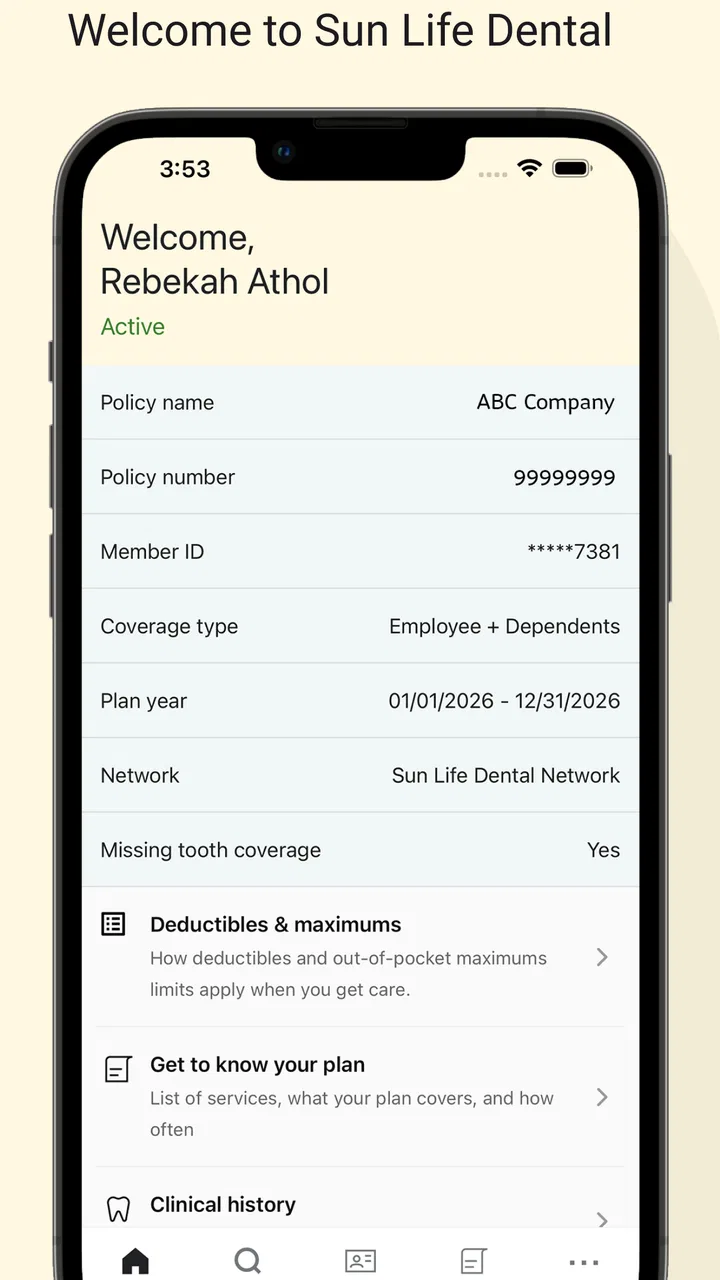
The Sun Life Dental app provides policyholders with easy access to their dental insurance details. Users can view plan coverage, find in-network dentists, and manage claims directly from the app. Additionally, it offers tools for estimating costs and tracking deductibles, making dental care more accessible and manageable.
02How user-friendly is the Sun Life Dental app?
The Sun Life Dental app is designed with a user-friendly interface, allowing for easy navigation. Both new and experienced users will find it simple to access coverage details, submit claims, and locate dental care providers. The app’s intuitive design ensures a hassle-free experience when managing dental benefits.
03Is the Sun Life Dental app secure?
Yes, the Sun Life Dental app prioritizes security by employing robust encryption protocols to protect user data. Personal information, such as policy details and health records, is kept confidential and secure. Users can feel confident that their data is safeguarded against unauthorized access while using the app.
04Can I use the Sun Life Dental app offline?
While some features of the Sun Life Dental app require an internet connection, such as updating claims or finding new providers, users can still access previously downloaded information offline. This includes essential details about their plan coverage and past claims, ensuring access even without internet connectivity.
05Is the Sun Life Dental app available for both Android and iOS?
Yes, the Sun Life Dental app is available for download on both Android and iOS platforms. Users can find it on the Google Play Store and Apple App Store, making it accessible to a wide range of devices. Regular updates ensure compatibility and improved functionality across all supported devices.
Pros
- User-friendly interface for easy navigation.
- Comprehensive coverage details readily available.
- Real-time claim status updates.
- In-app dentist locator for convenience.
- Secure login for privacy protection.
Cons
- Limited features for non-policyholders.
- Occasional login issues reported.
- No offline access to documents.
- Customer support response can be slow.
- Requires frequent updates for bug fixes.

Sun Life Dental (U.S.)
Gallery